


New to RV Camping? Setting Up Is Easier Than You Think
If you’re new to RV travel, arriving at your campsite for the first time can feel a little intimidating. You might be wondering:
- How do you level the RV?
- What order should you connect hookups?
- What equipment do you need?
- How long does setup take?
The good news is that setting up an RV at a campsite becomes simple with a clear routine. Most experienced RVers can complete the entire setup process in 10–20 minutes once they get used to it.
Whether you’re traveling through Texas or planning a longer stay at an RV park, learning how to properly set up your RV helps ensure comfort, safety, and smooth daily living.
In this guide, we’ll walk you through every step of RV campsite setup, from parking to connecting utilities.
Step-by-Step RV Campsite Setup for Beginners
If you’re new to RV travel, having a clear and repeatable process makes everything easier. RV campsite setup for beginners doesn’t have to feel overwhelming. Once you understand the correct order, the entire process becomes quick, smooth, and stress-free.
Most experienced RVers follow a simple routine every time they arrive at a campsite. This helps avoid mistakes, protects your equipment, and ensures everything is set up safely from the start.
Here’s the step-by-step RV campsite setup for beginners:
Step 1: Choose the Right Position at Your Campsite
Before you connect anything, you need to park your RV correctly.
Most RV parks offer two types of sites:
Back-in sites
You reverse your RV into the site.
Pull-through sites
You drive straight through without reversing.
If you’re new to RV driving, pull-through sites are often easier. However, back-in sites are very common in RV parks.
Tips for positioning your RV
- Drive slowly when entering the park
- Look for obstacles like trees or posts
- Use a spotter if possible
- Take your time backing in
Proper positioning ensures your hookups line up with the park’s utility connections.
Step 2: Level Your RV
Once your RV is parked, leveling is the next step.
Leveling your RV helps:
- Doors open properly
- Appliances function correctly
- Water systems operate smoothly
- Sleeping feels comfortable
Most RVs use one of two leveling systems.
Automatic leveling systems
Many newer RVs have built-in hydraulic or electric leveling systems. With the push of a button, the RV adjusts itself.
Manual leveling
Other RVs use leveling blocks or stabilizer jacks placed under the tires.
To check leveling:
- Use a bubble level
- Check front-to-back and side-to-side
Leveling should always happen before connecting utilities.
Step 3: Connect Your RV to Electricity
After leveling your RV, the next step is connecting power.
Most RV parks provide electrical pedestals with:
- 30-amp service
- 50-amp service
- Standard household outlet (sometimes)
Recommended safety step
Before plugging in your RV power cord, many RVers use a surge protector. This protects your RV from:
- Power surges
- Miswired pedestals
- Voltage spikes
How to connect power
- Turn off the breaker on the pedestal
- Plug in your surge protector (if using one)
- Connect your RV power cord
- Turn the breaker back on
Once connected, you can power your lights, appliances, and air conditioning.
Step 4: Connect Fresh Water
Water hookups provide a continuous supply of clean water to your RV.
Equipment you’ll need
- Fresh water hose
- Water pressure regulator
- Optional water filter
A water pressure regulator is important because campground water pressure can sometimes be higher than what your RV plumbing is designed for.
How to connect water
- Attach the pressure regulator to the faucet
- Connect your water hose to the regulator
- Connect the other end to your RV inlet
- Turn the water on slowly
Check inside the RV to ensure there are no leaks.
Step 5: Connect Your Sewer Line
If you’re staying at a full hookup campsite, you’ll have access to a sewer connection directly at your site.
What you need
- Sewer hose
- Clear elbow connector
- Disposable gloves
How to connect your sewer hose
- Attach one end of the hose to the RV sewer outlet
- Insert the other end into the campground sewer connection
- Secure the hose in place
Most RVers keep their black tank valve closed until it’s time to dump.
Leaving it open continuously can cause buildup in the tank.
Step 6: Extend Slide-Outs and Stabilizers
Once utilities are connected, you can extend your slide-outs if your RV has them.
Slide-outs increase interior space by expanding outward from the RV walls.
Before extending slide-outs
- Make sure the RV is fully leveled
- Check for obstacles outside
- Ensure there is enough clearance
After extending slide-outs, deploy stabilizer jacks if your RV has them.
Stabilizers help reduce movement when walking inside the RV.
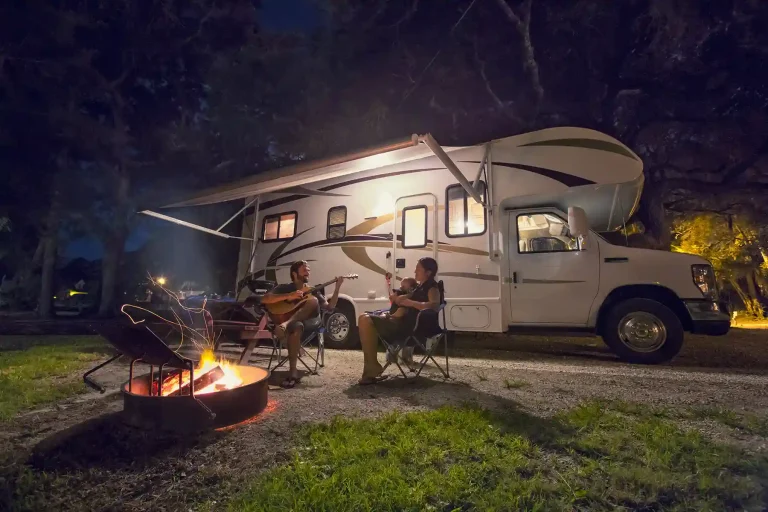
Step 7: Set Up Your Outdoor Area
One of the best parts of RV living is enjoying the space outside your RV.
Many RVers create small outdoor areas with:
- Folding chairs
- Outdoor rugs
- Small tables
- Portable grills
These outdoor spaces turn your campsite into a comfortable place to relax after a day of travel or work.
How Long Does RV Setup Take?
For beginners, the process may take 20–30 minutes.
After a few trips, most RVers can complete the entire setup routine in 10–15 minutes.
The key is developing a consistent order:
- Park
- Level
- Connect electricity
- Connect water
- Connect sewer
- Extend slides
- Set up outdoor space
Following the same order each time prevents mistakes.
Common RV Setup Mistakes to Avoid
Even experienced RVers occasionally make mistakes. Here are a few to watch for.
Forgetting the water pressure regulator
High water pressure can damage your RV plumbing.
Leaving black tank valves open
This causes waste buildup and unpleasant odors.
Not checking electrical pedestal condition
Always inspect pedestals before plugging in.
Parking too close to obstacles
Slide-outs need space to extend safely.
Equipment Every RVer Should Carry
A basic RV setup kit usually includes:
- Surge protector
- Water pressure regulator
- Fresh water hose
- Sewer hose
- Leveling blocks
- Disposable gloves
- Flashlight
Having the right gear makes campsite setup faster and easier.
Why Full Hookup RV Parks Make Setup Simpler
Full hookup RV parks are ideal for beginners because everything is available directly at your campsite.
Instead of driving to dump stations or refilling water tanks, you simply connect once and manage utilities as needed.
This makes RV living feel much more like traditional housing.
Is RV Setup Hard for Beginners?
At first, it might feel unfamiliar.
But RV systems are designed to be user-friendly. Once you understand the routine, campsite setup becomes one of the easiest parts of RV travel.
Many beginners are surprised by how quickly they gain confidence after just a few stays.
Why Central Texas Is Great for RV Camping
Central Texas is one of the best places to enjoy RV camping thanks to:
- Mild winters
- Wide open landscapes
- Easy highway access
- Growing communities
Whether you’re traveling through the region or planning a longer stay, Central Texas offers excellent conditions for RV living.
Looking for an Easy Place to Set Up Your RV?
If you’re new to RV camping, choosing the right park can make the experience much smoother.
At Rockdale RV Park, guests enjoy:
- Full hookup RV sites
- Spacious, level campsites
- Monthly and short-term stay options
- A peaceful Central Texas setting
Whether you’re traveling through the region or planning a longer stay, Rockdale RV Park offers a comfortable place to set up, relax, and enjoy RV life.
Contact Rockdale RV Park today and reserve your campsite for a stress-free RV stay in Central Texas.